Common Mistakes When Jump-Starting a Car (and How to Avoid Them)
A dead battery never picks a convenient moment. It happens in a car park at dusk, in the rain, with somewhere to be. Jump-starting is one of the few roadside fixes a driver can genuinely handle alone, and also one of the easiest to get wrong in ways that cost real money. Most damage does not come from bad luck. It comes from a reversed clamp, a spark in the wrong place, or a hopeful ten-minute crank. Here is how to do it properly, and what to avoid.
Start With Your Eyes, Not Your Cables
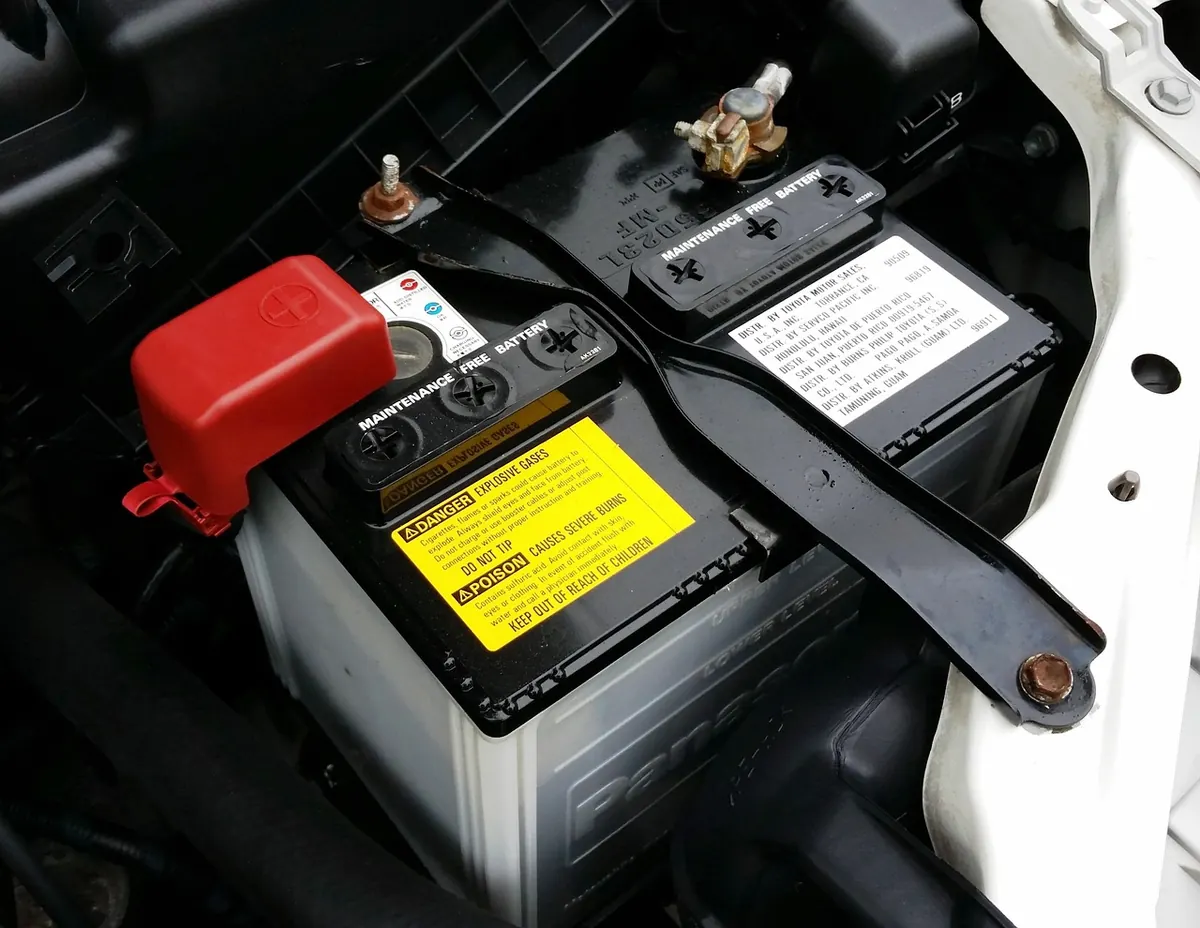
Before you open the bonnet, look at the battery. A cracked case, a bulge in the side, leaking fluid or a heavy crust of corrosion around the terminals all change the plan. If the casing looks swollen or damaged, do not attach anything. Call for recovery instead. In freezing weather a discharged battery can freeze, and a frozen one can split when current hits it.
Corrosion is worth ten minutes. The white-green crust that builds between a post and its clamp behaves like a resistor, so a connection that looks fine may barely pass current. Clean it with a stiff wire brush, dry everything, then move on.
Set both vehicles up before touching a cable: parked close but not touching, engines off, handbrakes on, and lights, radio, fans and heated seats all switched off. Body panels in contact with each other give current a stray path and can damage paint.
Connect Them in the Right Order
The order exists for a reason. The final connection is the one that usually sparks, and you want that spark well away from the battery.
- Red clamp to the positive post of the flat battery. Positive posts are marked + and are usually slightly larger.
- The other red clamp to the positive post of the good battery.
- Black clamp to the negative post of the good battery.
- The last black clamp to a bare metal point in the engine bay of the flat car: a lifting eye, an engine bracket, an unpainted bolt on the block or chassis. Not the negative post.
Then start the donor car, let it idle for two or three minutes, and start the flat one. If the cables feel warm, that points to thin conductors or a deeply discharged battery. Stop and reassess rather than pushing on.
Check the leads themselves before you begin. Thin, stiff cables with corroded clamps struggle to carry the current a starter motor draws, which means slow cranking and two flat batteries instead of one.
Mistakes That Happen While the Cables Are Live
- Reversed polarity. Red to black is the classic way to blow main fuses and upset control modules. If you spot it before cranking, disconnect everything, then check the car starts normally. If you have already cranked, do not keep trying.
- Clamps touching each other. A red and a black clamp brushing together is a dead short.
- Leaning over the battery. Batteries can vent hydrogen. Keep cigarettes, sparks and loose tools away, wear eye protection if you have it, and never rest a spanner across both terminals.
- Hands near moving parts. The donor engine is running. Keep fingers, sleeves and scarves clear of belts, pulleys and fans.
- Removing cables in the wrong order. Undo them in reverse: ground first, then the negative on the good battery, then the two positives. Keep the loose clamps apart as you go.
Cranking and Charging Errors
Give the flat battery something to work with. Two or three minutes of idling from the donor car is usually enough for a small petrol engine; a big diesel or a very flat battery needs longer. Then crank for no more than about ten seconds and wait roughly thirty seconds between attempts, so the starter can cool.
Do not rev the donor car hard. A fast idle is plenty. Redlining it does not speed anything up except alternator wear.
Repeated failed attempts are a message, not a challenge. If nothing catches after three or four tries, the battery is probably not the whole story. It could be a failing starter, a fuel problem, an immobiliser fault, or a battery that will not hold charge at all. Keep cranking and you risk overheating the starter and flattening the donor car too.
What You Do After It Fires
Once the engine runs, resist the urge to switch it off and tidy up. Leave it running, remove the cables in reverse order, then drive. The alternator needs time to replace what the start used, and a two-minute hop to the shops is not it. Twenty to thirty minutes of mixed driving, with heavy electrical loads switched off at first, is a better target.
If the engine dies the moment you disconnect the cables, or refuses to restart the next morning, the battery or the charging system needs proper attention. Repeated jump-starts postpone a diagnosis and are hard on an alternator that was never designed to charge a flat battery from empty.
Modern Cars, Smart Chargers and Hard No's
Read the handbook before clipping anything to a modern car. Plenty of manufacturers put the battery in the boot or under a seat and provide dedicated jump-start terminals under the bonnet. Owners of cars with stop-start systems or an absorbed glass mat (AGM) battery should be especially careful; those batteries want a proper charger rather than a burst of current. A portable jump pack is often the better tool, because it is more controlled, needs no second vehicle, and reduces the chance of a voltage spike upsetting sensitive electronics.
Two firm rules. Never try to jump-start an electric or hybrid car's high-voltage system, and never clamp onto anything under the bonnet of an EV beyond the points the handbook specifies. And never jump a battery with a cracked case, a swollen case or visible leakage. If you are unsure, a recovery service is cheaper than a set of control modules.
A Two-Minute Checklist for the Glovebox
- Both cars off, in Park or Neutral, handbrakes on, everything electrical switched off.
- Inspect the battery first. Damage or freezing means stop.
- Red to positive, red to positive, black to negative, black to bare metal.
- Charge for a couple of minutes, then crank in short bursts.
- Remove the cables in reverse order, then drive for at least twenty minutes.
Jump-starting is a skill worth having. Knowing when to put the cables down and call for help is the other half of it.
Photo: BruceEmmerling / Pixabay